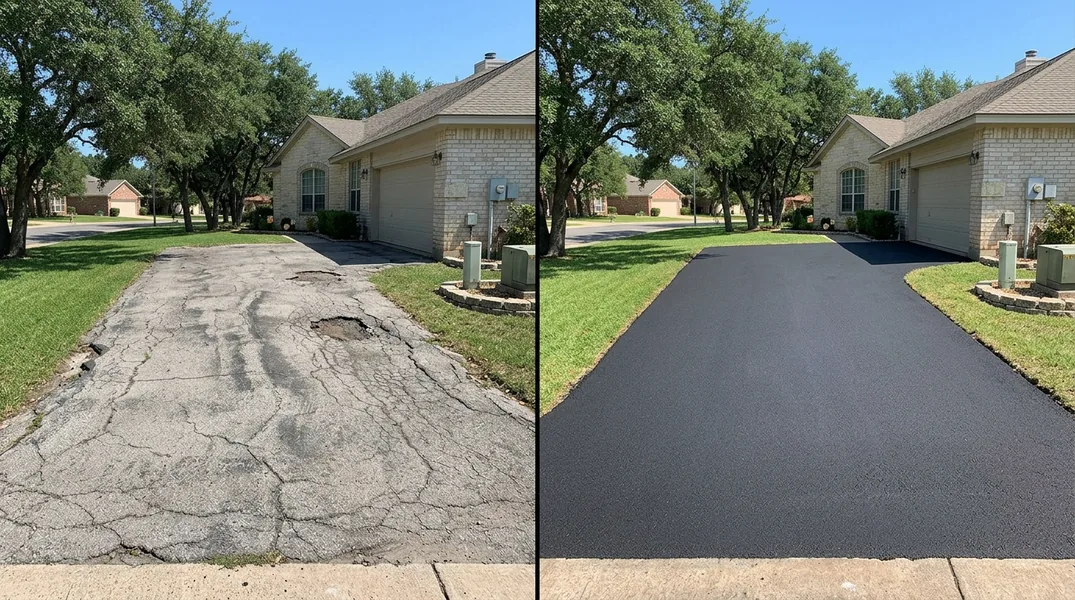
How Storm Runoff Damages Your Driveway
When heavy rains hit Austin, most homeowners think about gutters and basements. But your driveway is taking a beating too. Water runoff from storms doesn't just sit on the surface and evaporate. It seeps into small cracks and weak spots in your asphalt, then freezes and thaws with temperature changes, creating ruts, potholes, and accelerated deterioration.
The problem is especially acute in Austin because of our unpredictable weather patterns. We can experience heavy downpours followed by intense heat, which stresses asphalt in ways many homeowners don't anticipate. When water penetrates the base layer beneath your asphalt, it weakens the structural integrity of the entire driveway. What starts as minor surface cracking can become major rutting and subsidence within months if left untreated.
Reading the Signs: What Water Damage Looks Like
Before you need Pothole Repair & Asphalt Patching, you should know what early warning signs look like. Look for alligator cracking, where your asphalt develops a web-like pattern of interconnected cracks. This is almost always caused by water infiltration and base layer failure. You might also notice standing water on your driveway after storms, which indicates poor drainage or settling.
Ruts and rutting are another telltale sign. These are depressions that form from repeated traffic on weakened asphalt, often exacerbated by water damage underneath. If you see these patterns developing, especially in wheel paths, water has likely already compromised the base layer. Discoloration and soft spots are also red flags. A soft spot feels slightly spongy underfoot and usually indicates moisture trapped beneath the surface. The sooner you address these issues, the less expensive your repairs will be.
Why Proper Drainage Matters More Than Most Homeowners Realize
A well-designed driveway isn't just about the asphalt itself. It's about how water moves across and away from it. Proper slope and drainage are critical components that separate a driveway that lasts 15 years from one that fails in 5. When Asphalt Driveway Paving & Installation is done correctly, the contractor ensures adequate crown (a slight dome shape) so water sheds off naturally rather than pooling.
Unfortunately, this is where many driveway scams begin. Some contractors use leftover asphalt or cut corners on base preparation and slope, leaving your driveway vulnerable to water damage from day one. They might charge you for a full installation but skip the proper grading work that ensures long-term durability. This is exactly why you need to ask the right questions before hiring any paving contractor in your area.
How to Choose a Paving Contractor: Questions That Protect Your Investment
Choosing a trustworthy paving contractor is one of the most important decisions you'll make for your home's exterior. Start by asking about their experience with drainage and storm water management. A contractor worth hiring will explain how they'll slope your driveway and handle water runoff without hesitation. Ask them to walk you through their base preparation process in detail. How thick will the base layer be? What materials will they use? Will they compact it properly?
Never accept vague answers about these fundamentals. A legitimate contractor will provide specific details and explain why each step matters. Ask for references from customers whose driveways were installed at least three years ago, especially those who've experienced heavy rain seasons. Request a written contract that specifies materials, thickness of asphalt layers, timeline, and warranty terms. Be wary of contractors who pressure you into decisions or offer prices that seem too good to be true.
One of the biggest red flags is when a contractor offers to use leftover asphalt from another job. This is a classic scam that should immediately disqualify them from consideration. Leftover asphalt has unknown quality, age, and composition. It may have been sitting in a truck for weeks, which degrades the binder. Using it guarantees premature failure and water damage.
Avoiding the Leftover Asphalt Scam and Other Driveway Paving Scams
The leftover asphalt scam is rampant in the driveway industry, and homeowners often fall for it because the price seems attractive. Here's how it works: a contractor claims they have leftover material from a nearby job and can give you a deal. In reality, they're using recycled or degraded material that won't hold up to Austin's weather extremes. Your driveway fails within a couple of years, and the contractor has already moved on to the next unsuspecting homeowner.
Beyond leftover asphalt, other common driveway paving scams include inadequate base preparation (they skip it entirely to save money), incorrect asphalt thickness (they use less than specified), poor compaction (the asphalt isn't properly rolled and seated), and missing or fake licensing and insurance. Always verify that your contractor is properly insured, and bonded. Check with the Better Business Bureau and read independent reviews on multiple platforms.
Ask for a detailed written estimate that breaks down materials, labor, equipment, and timeline. Compare multiple quotes, but don't automatically choose the cheapest. The lowest price often indicates corners being cut. A fair price reflects quality materials, proper methodology, and experienced labor.
When to Call a Professional: Driveway Repair and Resurfacing Options
If your existing driveway is showing water damage but isn't completely failed, you may have options short of a full replacement. Driveway Repair can address isolated cracks and small potholes, extending your driveway's life by several years. However, if the damage is widespread, repair becomes a temporary fix. In those cases, Asphalt Resurfacing & Overlay might be the right solution. This involves laying a new layer of asphalt over the existing surface, which is more affordable than complete removal and replacement.
The key is addressing water damage before it becomes catastrophic. If you're seeing alligator cracking, ruts, or soft spots, don't wait for the next major storm. Contact Austin Asphalt Paving at (737) 256-6070 to discuss your options and get a free estimate. We'll assess the extent of the damage and recommend the most cost-effective solution for your situation. Whether you need repairs, resurfacing, or a complete new installation, we'll ensure proper drainage and storm-resistant construction.
Protecting Your Driveway: Maintenance Tips for Austin's Weather
Once you have a properly installed driveway, maintenance is key to protecting your investment from storm damage. Seal coat your asphalt every two to three years. This protective layer prevents water penetration and UV damage, significantly extending the life of your driveway. After heavy storms, inspect your driveway for new cracks or standing water. Address small issues immediately before they become expensive problems.
Keep your gutters and downspouts clear and directed away from your driveway. Make sure water from your roof doesn't pool on or near the asphalt surface. Fill any cracks you notice with asphalt crack filler before water can seep in. These simple maintenance steps, combined with proper initial installation, will keep your driveway resilient through Austin's unpredictable weather patterns. If you're unsure about your driveway's condition or need professional guidance, Austin Asphalt Paving is here to help. Call us at (737) 256-6070 or visit our website to learn more about our services and pricing.
Looking for a professional asphalt paving contractor in Austin? Austin Asphalt Paving responds fast for all your asphalt paving needs.
Get a Free Quote