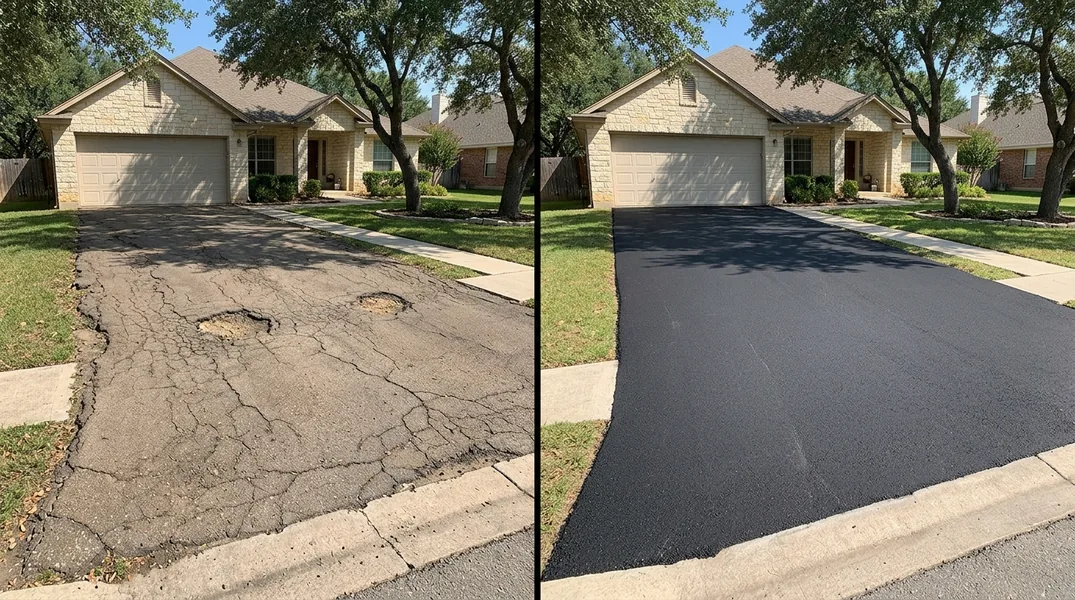
Signs Your Driveway Needs Repair vs. Replacement
One of the most common questions homeowners in Austin ask is whether their damaged driveway can be fixed or if it's time for a complete replacement. The answer depends on several factors, including the extent of the damage, the age of your driveway, and your budget. Understanding these signs will help you make an informed decision and avoid unnecessary expenses.
Driveway Repair is typically the best choice when damage is limited to specific areas. If you notice small cracks, a few potholes, or surface deterioration affecting less than 30 percent of your driveway's total area, repair is usually the most cost-effective solution. However, if your driveway is showing widespread cracking, large sections of missing asphalt, or structural failure, replacement becomes the more practical long-term investment. The age of your driveway also matters significantly. Most asphalt driveways last 15 to 20 years with proper maintenance, so if yours is approaching or exceeding this age, replacement might be worth considering even if current damage seems manageable.
When Repair Is the Right Choice
If your driveway has isolated problem areas, Pothole Repair & Asphalt Patching or Asphalt Resurfacing & Overlay can extend its life by several years. These targeted repairs work well for driveways that are otherwise in decent condition. For example, if you have a few potholes and some surface cracks but the base layer is still solid, patching and resealing can restore functionality and appearance without breaking the bank.
Repair is also ideal when you're dealing with early-stage wear and tear. Austin's hot summers and occasional freeze-thaw cycles can accelerate asphalt deterioration, but catching damage early makes a significant difference. Small cracks can be sealed before water penetrates the base, and minor surface damage can be addressed with overlay work. Many homeowners find that investing in timely repairs and proper maintenance helps them avoid premature replacement, saving thousands of dollars over time.
When Replacement Becomes Necessary
Full Asphalt Driveway Paving & Installation is necessary when structural damage goes beyond surface-level issues. If you see alligator cracking (a web-like pattern of interconnected cracks), large sections of missing asphalt, or a driveway that's sinking or heaving, replacement is likely your only option. These signs indicate that the base layer or subgrade has failed, and patching won't solve the underlying problem. Attempting to repair a structurally compromised driveway is like putting a band-aid on a broken bone. It might look better temporarily, but the problem will continue to worsen.
Another key indicator is age combined with damage. If your driveway is already 15 to 20 years old and showing multiple signs of deterioration, replacement is usually more economical than continued repairs. You'll avoid the frustration of repeatedly patching the same areas, and you'll gain the peace of mind that comes with a new, warrantied surface. Additionally, a new driveway can improve your home's curb appeal and potentially increase property value, making replacement a worthwhile investment for many homeowners in Austin.
Understanding How Long for Asphalt to Cure and Drive Time
If you've decided on Asphalt Driveway Paving & Installation, it's important to understand the curing timeline. Many homeowners wonder how long for asphalt to cure before they can use their driveway normally. The answer involves both initial set time and full curing time. Fresh asphalt typically reaches initial set within 24 to 48 hours under normal weather conditions. This means the surface will feel firm and you can walk on it, but it's not yet ready for vehicle traffic.
How long before you can drive on new asphalt? Most contractors recommend waiting 48 to 72 hours before driving on a newly paved driveway, though some may advise waiting up to a week for optimal results. During this curing period, the asphalt continues to harden and bond properly. Driving on it too soon can create ruts, soft spots, or displacement that compromises the driveway's integrity and lifespan. Austin's warm temperatures can actually speed up the curing process compared to cooler climates, but you should still follow your contractor's specific recommendations. Full curing typically takes 30 to 90 days, during which the asphalt reaches maximum hardness and strength.
New Asphalt Driveway Care: Maintenance Tips for Longevity
Once your new driveway is fully cured, proper maintenance is essential for protecting your investment. New asphalt driveway care begins immediately after installation. During the first few weeks, avoid parking heavy vehicles in the same spot for extended periods, as concentrated weight can cause depressions before the asphalt has fully hardened. Also avoid sharp turns or sudden acceleration, which can create marks or damage the surface.
The most important maintenance task is determining how often to seal driveway surfaces. Most experts recommend sealing your asphalt driveway every 2 to 3 years, though Austin's intense sun and heat may require more frequent sealing. A quality seal coat protects the asphalt from UV rays, water infiltration, and oxidation, which are the primary causes of deterioration. By sealing regularly, you can extend your driveway's lifespan by 5 to 10 years or more. Additionally, keep your driveway clean by sweeping away debris, addressing spills promptly, and filling any small cracks as soon as they appear. These simple steps cost far less than repairs and help your driveway stay in excellent condition for decades.
Asphalt Driveway Paving & Installation Cost in Austin: What to Budget
Understanding the pricing for driveway work helps you plan your budget effectively. The cost of repair versus replacement varies significantly based on damage extent, driveway size, and local market conditions. Pothole repair and patching typically range from a few hundred to a couple thousand dollars, depending on the number and severity of problem areas. Overlay or resurfacing work usually costs less than full replacement but more than targeted repairs, making it an excellent middle-ground option for many homeowners.
Full replacement of a standard residential driveway in Austin generally costs more upfront but provides superior long-term value. Factors affecting pricing include driveway size, site conditions, base preparation requirements, and current asphalt material costs. To get an accurate estimate tailored to your specific situation, contact Austin Asphalt Paving at (737) 256-6070 or request a free estimate online. Our team will assess your driveway's condition and provide honest recommendations about whether repair or replacement makes the most financial sense for your home.
Looking for a professional asphalt paving contractor in Austin? Austin Asphalt Paving responds fast for all your asphalt paving needs.
Get a Free Quote