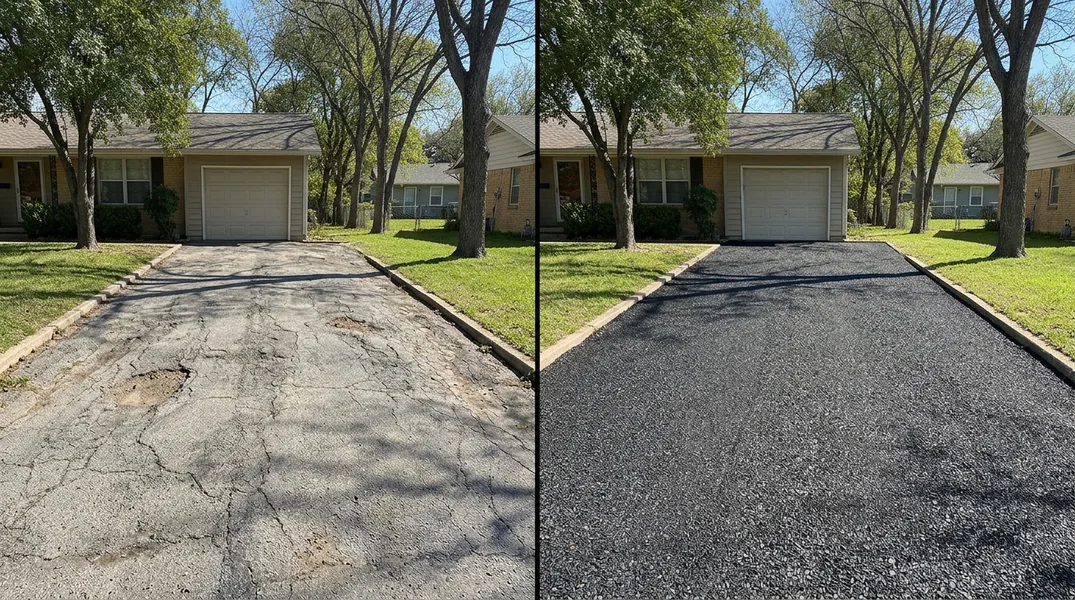
Understanding Blackland Prairie Clay and Its Impact on Austin Driveways
If you live east of I-35 in Austin, your driveway faces a unique enemy that homeowners west of the interstate rarely encounter: Blackland Prairie clay. This expansive soil type is notorious for causing severe damage to asphalt surfaces, and understanding why is the first step toward protecting your investment.
Blackland Prairie clay is characterized by its high clay content and exceptional ability to absorb and release moisture. When it rains, this soil expands dramatically as it absorbs water. During dry periods, it shrinks and cracks. This constant cycle of expansion and contraction creates tremendous pressure on anything sitting on top of it, including your driveway. Unlike sandy or loamy soils that remain relatively stable, Blackland Prairie clay is essentially a living, breathing foundation that moves beneath your asphalt layer, causing it to buckle, crack, and develop dangerous potholes over time.
Frost Heave and Winter Damage: Why Austin Driveways Fail Faster
One of the most destructive forces affecting driveways in Austin east of I-35 is frost heave, a phenomenon that occurs when water trapped in clay soil freezes and expands. Even though Austin rarely experiences harsh winters, the occasional freeze combined with Blackland Prairie clay creates ideal conditions for frost heave damage. When temperatures drop below freezing, moisture within the clay expands, pushing upward with considerable force. This uplift doesn't happen uniformly across your driveway, so some sections rise while others remain stable, creating uneven surfaces and stress points where cracks inevitably form.
What makes frost heave particularly insidious is that the damage often goes unnoticed until it's severe. A homeowner might see a small crack in early spring and assume it's minor, not realizing that the underlying soil movement is continuing. By the time you notice significant buckling or a visible frost heave ridge running across your driveway, the structural integrity of your asphalt has already been compromised. This is why Driveway Repair in clay-heavy areas often requires more than simple patching. The root cause, soil movement, must be addressed to prevent recurrence.
Pothole Formation in Expansive Clay Soils
Pothole Repair & Asphalt Patching is one of the most common services requested by homeowners east of I-35, and there's a direct reason: Blackland Prairie clay accelerates pothole formation. Potholes develop when the asphalt layer cracks due to soil movement, and water seeps into the space below. The water weakens the base layer, and as vehicles drive over the compromised area, the asphalt breaks apart and pieces are displaced, leaving a hole. In clay soils, this process happens faster because the clay itself is constantly moving and creating new stress points in the asphalt above.
The problem compounds over time. One pothole often leads to several more in the surrounding area because the underlying soil disturbance affects the entire zone. Homeowners who attempt temporary fixes with cold-patch asphalt find that potholes return within weeks or months because the patch doesn't address the shifting soil beneath. This is why professional Pothole Repair & Asphalt Patching requires a thorough assessment of the entire driveway condition, not just the visible damage.
Repair or Replace Asphalt Driveway: Making the Right Decision for Clay-Prone Areas
When your driveway shows significant damage from clay soil movement, you face a critical decision: should you invest in repairs, or is it time for a full replacement? The answer depends on several factors, including the extent of the damage, the age of your driveway, and your long-term plans for your property. If your driveway is less than five years old and the damage is localized to a few cracked areas, targeted Driveway Repair might be cost-effective. However, if you're seeing multiple potholes, widespread cracking, or significant buckling, replacement is often the more practical solution.
One important consideration for homeowners in clay-heavy zones is that new asphalt will eventually face the same soil movement challenges unless the underlying issue is mitigated. Some homeowners invest in proper drainage solutions or soil stabilization before laying new asphalt, which can extend the life of the driveway significantly. Asphalt Driveway Paving & Installation in these areas should include a thorough site assessment to identify drainage problems and recommend solutions that address the root cause of failure. When you're ready to explore your options, Austin Asphalt Paving can provide a comprehensive evaluation and honest recommendation about whether repair or replacement makes sense for your specific situation.
Asphalt Resurfacing as a Middle-Ground Solution
For driveways that are structurally compromised but not yet beyond repair, Asphalt Resurfacing & Overlay offers a practical middle ground between patching and full replacement. This process involves cleaning the existing asphalt surface and applying a new layer of asphalt on top. It's less expensive than complete removal and replacement, but more durable than temporary patches. For homeowners in clay-prone areas, resurfacing can add years to your driveway's life, especially if the base layer is still sound and the damage is primarily surface-level.
However, resurfacing is not a permanent solution for active soil movement. If your driveway is experiencing ongoing frost heave or significant clay expansion, a resurfaced layer will eventually crack again as the ground beneath continues to shift. The key is timing. If you catch the problem before the base layer is severely damaged, resurfacing can be a smart investment. Austin Asphalt Paving recommends getting a professional inspection to determine whether your driveway is a candidate for resurfacing or if more comprehensive repairs are necessary.
Protecting Your Driveway: Prevention and Professional Care
While you cannot eliminate Blackland Prairie clay from beneath your driveway, you can take steps to minimize the damage it causes. Proper drainage is the most important preventive measure. Water that pools on or around your driveway accelerates clay expansion and contraction cycles. Ensure that your driveway slopes away from your home and that gutters direct water away from the pavement. Regular seal coating can also help by protecting the asphalt surface from water infiltration, slowing the deterioration process.
The best protection, however, is professional monitoring and timely maintenance. Small cracks should be sealed as soon as they appear to prevent water from reaching the base layer. Regular inspections can catch problems early, when they're cheaper and easier to fix. If you're concerned about your driveway's condition or want to discuss long-term maintenance strategies, Austin Asphalt Paving is here to help. Call (737) 256-6070 or request a free estimate to have your driveway evaluated by experienced professionals who understand the unique challenges of clay soils in the Austin area. We can recommend the best course of action to protect your investment and keep your driveway safe and functional for years to come.
Looking for a professional asphalt paving contractor in Austin? Austin Asphalt Paving responds fast for all your asphalt paving needs.
Get a Free Quote